

This article is part of an ongoing series in partnership with TN Repro News.
Last week, we reported on the revival of an extremist anti-abortion operation led by Operation Rescue founder Randall Terry. That reporting focused on the group’s renewed visibility—but clinic harassment is only part of what’s unfolding.
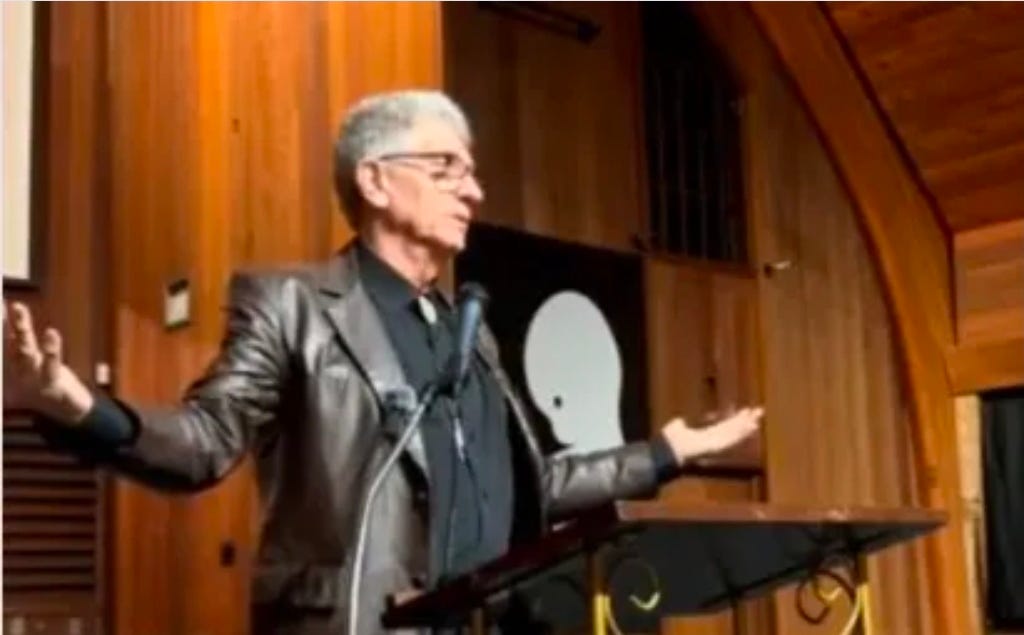
Audio from inside the Open House offers a clear picture of this moment. We must listen to their words, plainly, to understand the threat they pose to reproductive rights organizations, clinic staffers, patients, and the safety of helpers and journalists.
Listen below to several statements made by Randall Terry, and pay close attention to the audience reactions. What’s being built here is a content farm and an extremist training space. They say their goals quite literally, and we should listen. Groups like these are so dangerous that even mainstream pro-life organizations do not want them.
1. “A Weapon of War”
What Terry believes this moment allows
In recorded remarks, Terry refers to the new Memphis training complex as a “weapon of war.” The language is deliberate. It reflects how he has long framed abortion: not as a moral debate, but as a battlefield. Their “peaceful” marketing is a ruse; know that.
Operation Rescue’s clinic blockades in the 1980s and 1990s escalated into violence. They led to the passage of the Freedom of Access to Clinic Entrances (FACE) Act in 1994, which shut down mass blockades as a viable tactic. This is who they are: violent.
The Memphis complex is not framed as a protest site or a temporary training space. It is framed as infrastructure meant to be replicated, exported, and deployed elsewhere. The marketing is shameless: listen above while he directs an audience during a shoot.
The strategy is clear: produce content and political campaigns, get media attention from activists willing to go to jail, show shocking images, recruit and repeat.
Inside an 80s Extremist Anti-Abortion Group’s New Strategy

This article is part of a series in partnership with TN Repro News.
2. Running for Office as Media Strategy
How campaigns become advertising vehicles
This part isn’t a new strategy, but it will burn like wildfire now thanks to the Internet. Terry encourages participants to run for office—not to win, but to generate coverage.
He views political campaigns as advertising platforms. They’ve never wanted political control; they just want massive media buys. Running for office allows candidates to place anti-abortion messaging in paid media and to target Democratic officials under the legal protections afforded to campaigns. The campaign itself becomes the product.
This approach lowers the barrier to entry. Candidates do not need party backing or a viable path to office. They need attention, and paid ads provide it. The result is a total distortion of the civic process; it also weakens democracy and adds a new, dangerous layer onto media outlets trying to scrape by on what’s left of the First Amendment.
I attended Randall Terry's open house and ended up in an anti-abortion video shoot

UPDATE: This post has been updated to include responses from Ford Fischer, a primary source documentarian who was also present at the event on December 3, 2025.
3. Religious Extremism vs. Anti-Abortion Lobby
How national policy efforts collide with extremist recruitment
Terry has acknowledged that much of the mainstream anti-abortion movement does not want him or his followers. He knows his approach is extremist and unpopular.
Terry’s training center operates in direct opposition to the work of Right to Life, Students for Life, and SBA. Regardless, he is committed to teaching the next generation of extremists, to go for “the bridge too far,” which will only deepen fractures, something the anti-abortion movement is desperately trying to avoid.
Anti-abortion organizations have spent decades distancing themselves from clinic harassment to pursue policy goals. In election years, like in 2026, this will heighten that caution, with antis pushing out controversy out to avoid voter backlash.
Listen to Will Brewer, a lobbyist with Tennessee Right to Life, explain the importance of unity in the movement in this now-deleted recording from earlier this year.

4. ‘Fishing’ for the next wave
When Terry talks about “fishing,” he is describing a recruitment strategy, not a metaphor. Paid political ads are used to push extremist content into the public sphere, not to win elections, but to locate people who respond to it. The ads serve as bait, drawing in isolated viewers already receptive to escalation and confrontation.
The Memphis center then acts as a content studio and training ground. Activists are taught how to record, re-record, and refine messages for maximum reach, learning how to produce viral content that can be amplified through paid ads and social platforms. Audience reaction will be part of the process: virality and engagement will signal which messages land, where to pivot, and who is ready to go on the road.
It functions as a collegiate campus for “students” looking for a place. Young people who are disillusioned or anti-feminist will feel dangerously accepted. And when he eventually franchises centers across the country, we need to look at the threat clearly.
Become a paid subscriber to stay up to date on this story throughout 2026. It will be essential to track their national goals and how anti-abortion groups will respond.
