

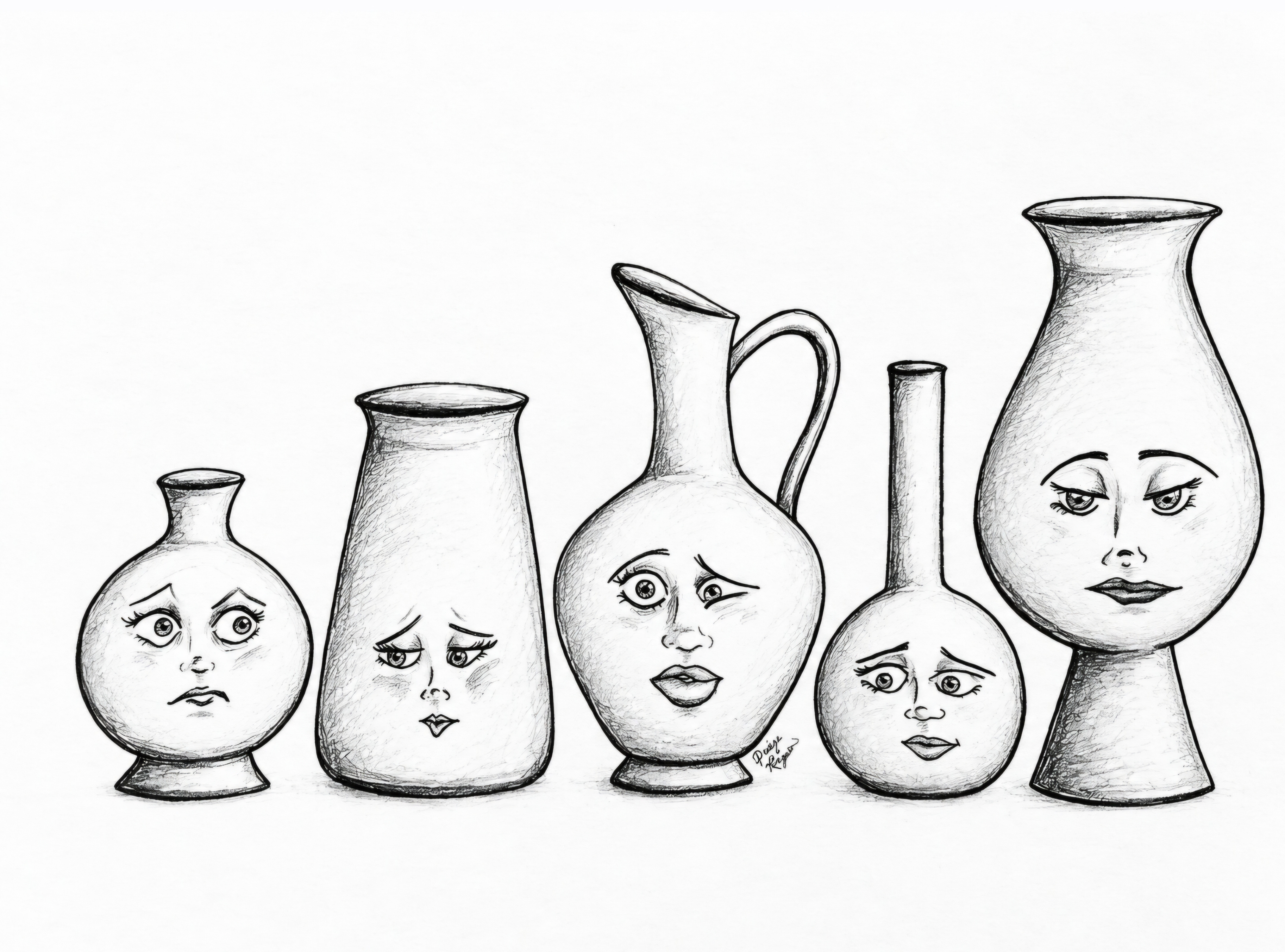
Objectification is a particular form of dehumanization that involves seeing and/or treating a human being as an object. Scholars have identified at least TEN WAYS of treating persons as objects. THIS SERIES discusses each.

Inertness
The objectifier treats the object as lacking in agency, and perhaps also in activity

“Earthen vessels.”
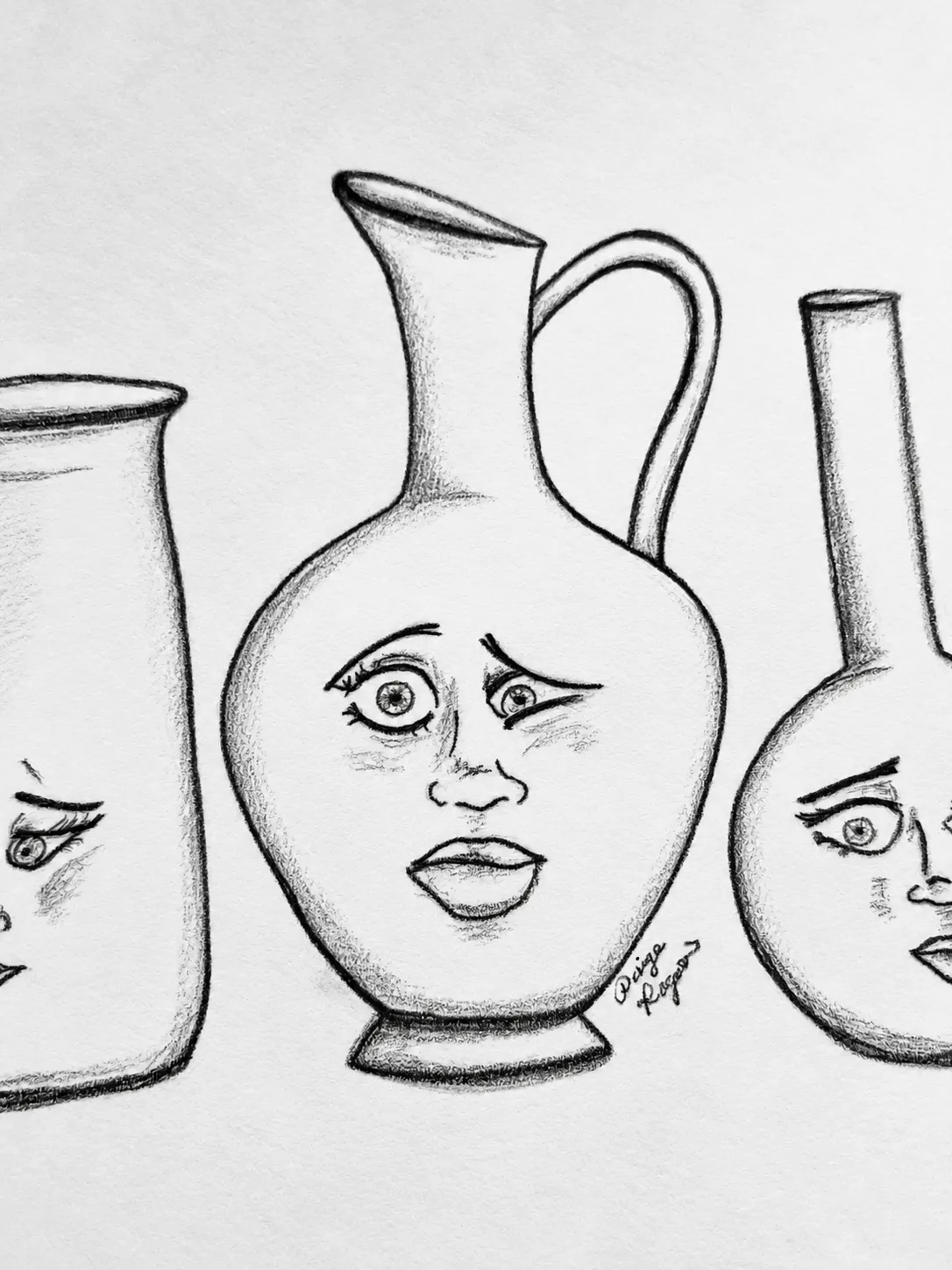
Those two words kept ricocheting through my mind as I sat down to draw the above headline image for this article.
“Earthen vessels.”
On December 1, 2021, the Solicitor General for the State of Mississippi stood in front of the Justices of the Supreme Court and asked them to overturn Roe v. Wade (and with it, women's equal right to personhood under the law). That same day, a member of the U.S. House of Representatives stood on the House floor and urged the Court to overturn Roe v. Wade in a bizarre diatribe that labeled women “earthen vessels.”
“Earthen vessels.”
Like clay bowls, pitchers, and vases. Inert, ownable objects.
Can't you just imagine it now? Rows of women shaped like water pitchers and flower vases and candy bowls. Available for purchase at your local home goods store. ‘Reproductive Vessels $25.99 ea.’

Objectification “essentially sees the female body through the metaphor of objects and machines.”1
Vessels are objects: curved containers used to hold something.
Vessels are inert: passive and lacking human agency (the ability to act).
When women are objectified, “they are in effect dehumanized” — stripped “of a soul [and] emptied essentially of [their] human nature traits.”2 “To perform this imaginative feat of rendering the human being to an object is to strip the person of human-centric traits of agency and experience, and reduce the person, in perception, to a being devoid of agency, reasoning, intentionality, and sentience.”3
INERT
(a) Lacking agency
(b) Passive
(c) Having no inherent power of action, motion, or resistance (opposed to active)
INERTNESS
(a) The state or quality of passiveness
(b) The state or quality of lacking agency
The reproductive objectification of women as inert reproductive vessels has extremely entrenched cultural, religious, and historical roots.
Aristotle (384–322 BC), for example, framed women as passive receptacles of the active male seed.4 A philosopher and arch advocate for male control of women’s bodies who believed that a woman is “a deformed male,”5 Aristotle applied his view of woman’s passive, “inferior role in reproduction to her role in society.”6 Aristotle believed that “marriage and reproduction should be regulated by the [male] state, thereby reflecting an underlying view of women as breeding vessels and subordinate members of the state.”7
State control over reproduction and women’s bodies. — “Misogyny,” with its corresponding policies, “is the law enforcement branch of patriarchy.”8
Instead of rejecting Aristotle’s sexism, patriarchal religions (especially during the medieval period) integrated Aristotle’s views of women into their theology, thus institutionalizing the objectifying concept of woman-as-reproductive-vessel.
Thomas Aquinas (1225–1274), for example, adopted Aristotle's views. For Aquinas - a Catholic priest, theologian, and philosopher whose lack of biological knowledge is difficult to separate from his overt sexism and male supremacism9 - a “woman was merely a fetal container, because the very purpose of her being was as a passive and inert receptacle for generating life, the active force of which was totally provided by the man.”10
“Earthen vessels.”
For Catholic priest and inquisitor Francesco Emanuele Cangiamila (1702-1763), pregnant women were so inert that they didn't even perform the physical act of giving birth. Rather, God was the one doing all the pushing. Women were only passively present for the event, “while ‘men (fetuses), so vigorous and healthy, climbed[] out of the prison of their mothers’ wombs without any assistance.’”11 As if.
Today, Woman-protective anti-abortion arguments (WPAA) frame the pregnant person as “markedly passive. If she is mentioned at all, it is often via metonymy, where a specific body part of reproductive function stands in for her whole” (see Reduction to Body).12 Even when a pregnant person “is actually described in person-terms, she [still] tends to take an object role.”13
Woman-protective anti-abortion arguments “deprive women of agency through reliance upon non-agentive (intransitive) verbal structures, as in emphasizing things are done to women, as opposed to stating that women do things.”14 Hence, pregnant people are constructed as inert objects, “relegated in the frame to being acted upon (by others).”15
“Earthen vessels.”
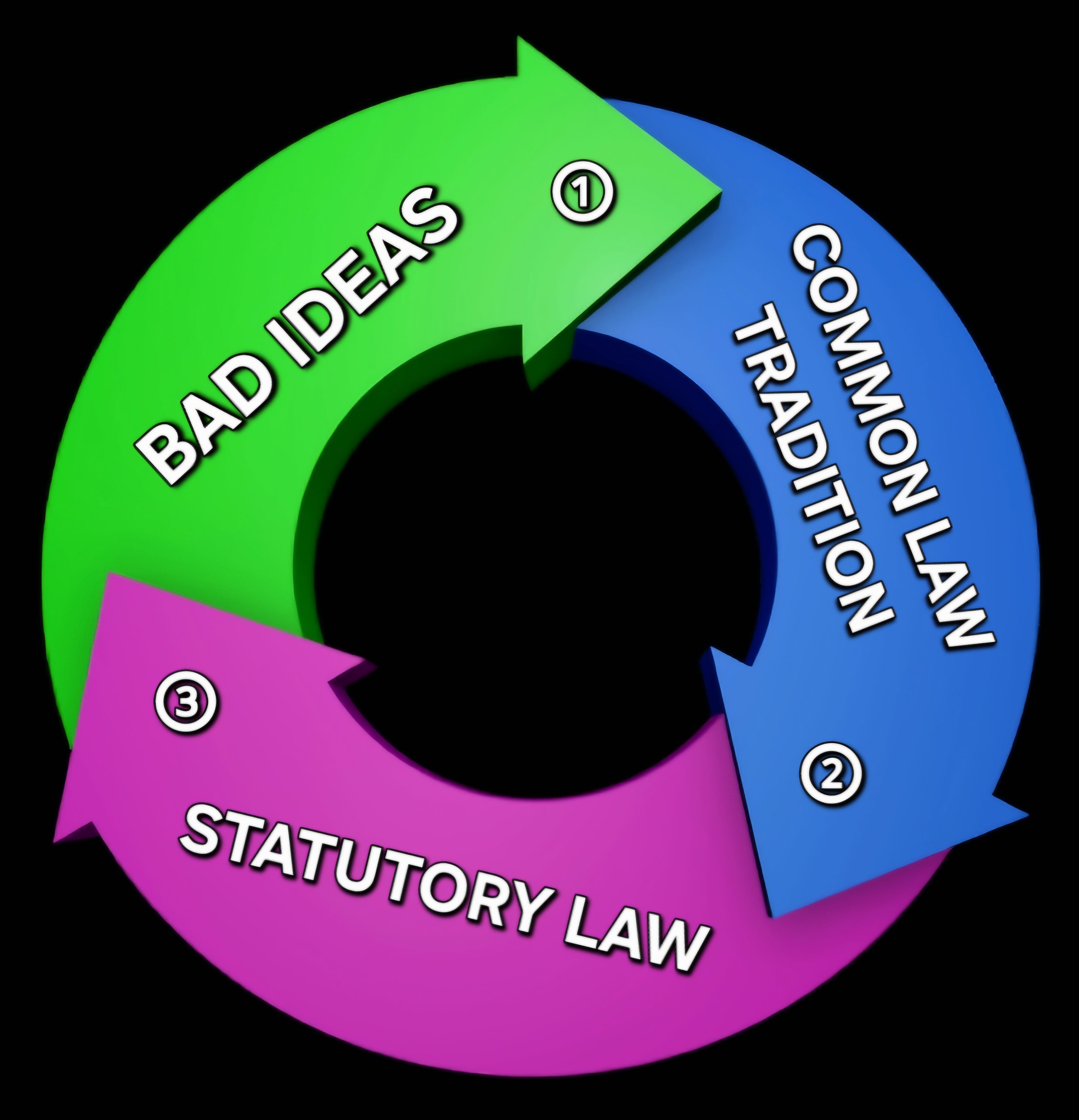
Odious ideas about women, and the reproductive objectification of people who are or may become pregnant, never remain confined to the pages of philosophical, political, or religious treatises; they take on a life of their own and, like weeds, they spread and become difficult to uproot. Loathsome ideas (and the accompanying rhetoric) about women transform from ideas into common law tradition, and then transform from common law tradition into statutory law.16
Enshrining into law the objectification of women as current or future inert fetal containers “is especially pernicious because of the power such enactments have, not only in controlling the actual status and rights of women in society, but also in shaping social values and attitudes about women.”17 As a result, our society continues to be “plagued with an endemic indifference to women's personhood” and “is only too ready to regard women as inert receptacles.”18

OBJECTIFICATION: INERTNESS
The objectifier sees and treats the object (objectified human being) as a mere thing that lacks agency.
The objectifier sees and treats the object (objectified human being) as a mere thing that is passive, having no inherent power of action, motion, or resistance (opposed to active).
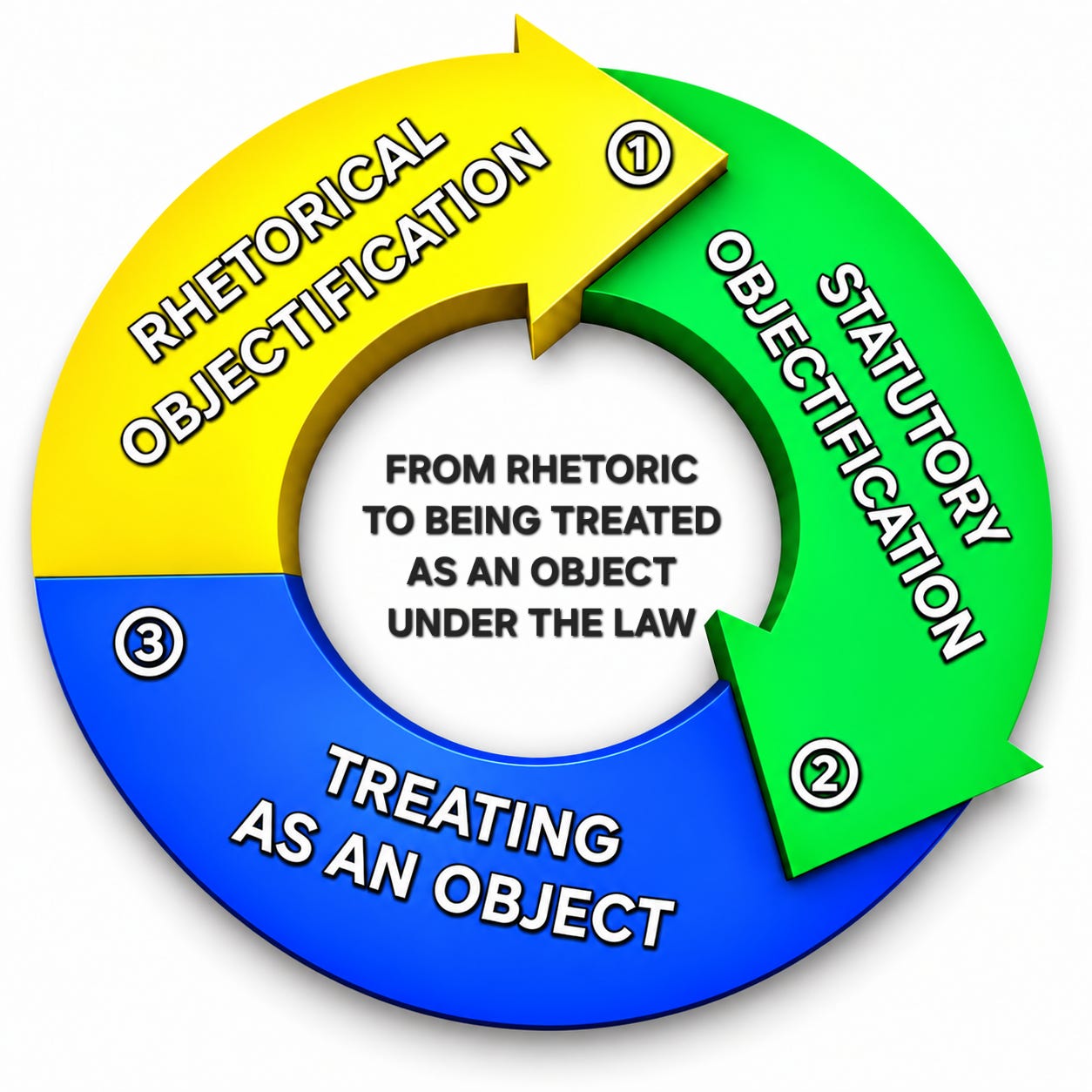
Once the government sees you as an object, it will treat you as one.
“The intrusive State has long viewed” — and then treated — “women as [inert] fetal containers.”19 For example, “the vast majority of states, mostly through statute but occasionally through official forms, currently make the stated wishes of a terminally ill pregnant patient wholly or partially irrelevant to decisions regarding the continuation of life-sustaining treatment.”20 As Boone and McMichael detail:
“Beginning in the 1980s, many states passed laws dealing with advance directives, also referred to as ‘living wills.’ These laws were designed to empower individuals to, among other things, make decisions regarding their wishes for continuation of medical treatment were they to become incapacitated in the future. While most of the laws contained language to the effect that any adult of sound mind could draft such a document and expect that their expressed wishes would be respected, most of the laws also included carve out provisions for a single type of competent adult—pregnant women.”
It is a matter of fact that, “in no jurisdiction” in the country, “can the organs of a medically brain-dead individual be harvested without the explicit consent of that person, much less over that person’s explicit, written instructions to the contrary, despite the fact that such an action might allow the continuation of an organ recipient’s life.”21 Yet, “in many states invalidate the advance directive of a pregnant person regardless of her specific expressed wishes, the wishes of her family or healthcare proxy, or potential or actual fetal viability.”22
“In these states, a pregnant person’s loved ones cannot discontinue life support consistent with the patient’s written wishes but are obliged to let the state utilize her body in an effort to continue the pregnancy.”23
In these states, all women - as an objectified people group - are viewed as intermittent reproductive vessels; as such, their right to direct their own end of life care is revocable the instant they become pregnant. For these states, women are always potential fetal containers and these states are prepared to treat them as such. As Boone and McMichael observe, “a more apt reflection of the state’s treatment of women as reproductive vessels would be hard to find.”24
Sometimes, illness can render a person inert - unable to act. When circumstantial inertness intersects with pregnancy, the concept of pregnant people as reproductive vessels can have deadly consequences.
Consider the case of Angela Carder. While terminally ill and confined to a hospital bed, a judge ordered Angela to undergo a cesarean operation—not to benefit Angela, but to benefit Angie’s non-viable fetus. After acknowledging that forcing Angela to undergo a major operation would hasten her death,25 Judge Emmet Sullivan nevertheless ruled that “the court is of the view that the fetus should be given the opportunity to live.”26 Both Carder and her baby died shortly after the operation.
“My goodness, if you’re pregnant, they can kill you,” legal scholar Dorothy Roberts recalled thinking as she read about the case in the news.
“Here, clearly, a still living human subject had become, for all legal purposes, dead matter, a mere fetal container. A woman whom no court in the country would force to undergo a blood transfusion for a dying relative had come to be legally regarded, when pregnant, as a mere life support system for a fetus.”27
Just a year earlier, scholar and ethicist George Annas had warned, “Favoring the fetus radically devalues the pregnant woman and treats her like an inert incubator.”28 “Such a view,” he said, “makes women unequal citizens,” and would likely lead to forced surgery.29
“If women must [submit] to such ‘care’ of their fetuses, they are relegated to the role of containers. Moreover their own rights are made so subordinate that the container may be opened to gain access to the fetus, even when the container may be damaged.”30
He later referred to forced cesareans as “the most unkindest cut of all.”
The image of people who are pregnant as inert fetal containers “is evident in cases like these in which pregnant women are forced to undergo unwanted surgery on behalf of their fetuses, operations which physicians agree increase the risk of the woman's death. These cases sharply diverge from the general legal doctrine that individuals are not required to undergo any risk of physical harm to help another.”31
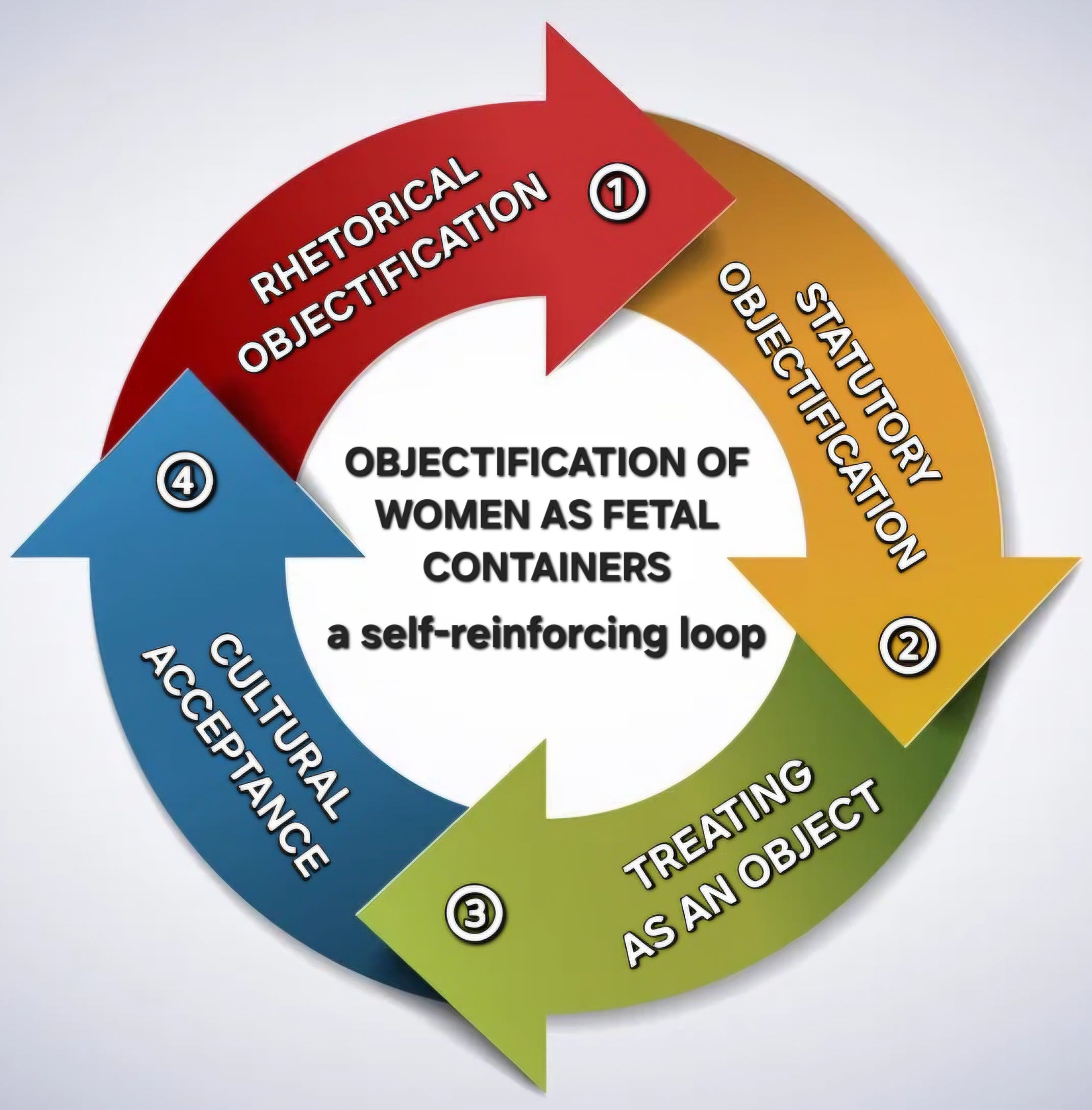
Unfortunately, “the objectification of women as [inert] fetal containers has the potential to start a self-reinforcing loop in which, once associated with objects, those with the perceived potential for pregnancy are legally devalued and this devaluation results in even less respect for their full legal personhood.”32
As Boone and McMichael observe, “The more that the legal system does not respect pregnant people’s rights in the same manner as other human being’s, the firmer the cultural understanding of pregnant people as somehow less than fully embodied legal persons becomes.”33

Let's dig deeper…
Time, research, and resources go into each in-depth article at rePro-Truth. To show appreciation for paid subscribers, this section includes additional content available only to them.
Those who oppose women’s full and equal personhood frequently objectify pregnant people as inert things. Below are a few of the worst offenders.
